Gamer is a thought-provoking science fiction film directed by Mark Neveldine and Brian Taylor, starring Gerard Butler in the lead role. Released in 2009, the movie offers a dystopian vision of the future, where virtual reality has become an all-encompassing entertainment and gaming experience. Exploring the ethical and technological implications depicted in “Gamer” is crucial, as it raises significant questions about the potential consequences we face today of advanced virtual reality technologies.
In Gamer, a society heavily reliant on advanced virtual reality technology called “Society” depicts individuals who can control real-life human avatars in high-stakes games. The film highlights the desire for escapism and the extent to which people are willing to disconnect from reality to indulge in virtual experiences while raising questions about the impact of these immersive technologies on individuals’ mental well-being and their ability to engage with the real world.
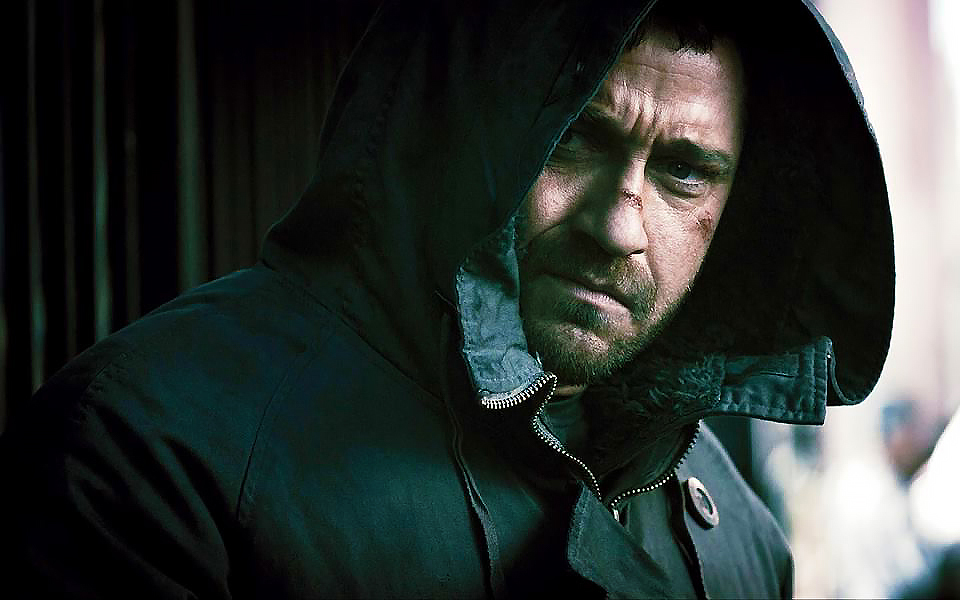
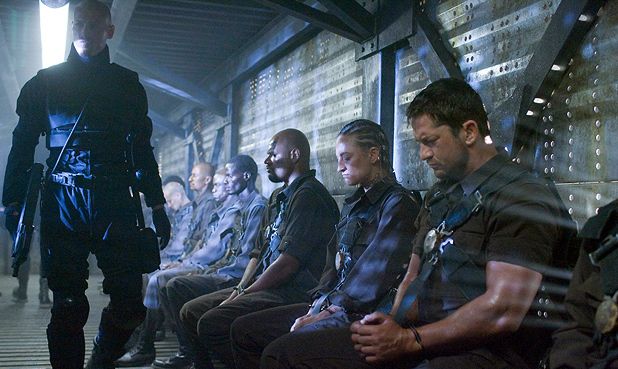
One of the central themes in Gamer—and not unfamiliar in today’s world—revolves around the blurred boundaries between virtual and real-life experiences. The film showcases the controversial “Slayers” game, where real-life prisoners become unwilling avatars controlled by players. By raising profound ethical questions about the treatment of human life, the exploitation of vulnerable individuals, and the devaluation of human dignity in the pursuit of entertainment, the movie explores the dangers of technological dependency and the potential for abuse when advanced virtual reality systems fall into the wrong hands. The film portrays the all-encompassing control exerted by the corporation behind Society, which manipulates and exploits both players and avatars for profit. It serves as a cautionary tale about the concentration of power in the hands of a few and the potential for technological advancements to be used for nefarious purposes.
The pervasive surveillance infrastructure embedded within Society, where players’ actions are constantly monitored and streamed to millions of viewers, is highlighted and was once mocked upon the film’s release. Concerns about privacy, consent, and the erosion of personal freedoms in a hyper-connected world are significant in this film, and through its narrative, Gamer provokes contemplation on the impact that technology has on human connection—the potential consequences of a society that values entertainment over privacy and the implications of constant surveillance. As a result, the film juxtaposes the shallow virtual relationships within Society with the authentic connections forged in the real world. It underscores the importance of genuine human interactions and the dangers of substituting them with virtual experiences that can isolate individuals from true emotional connections, leading to debauchery, family breakdown, societal division and a skewed view of God-like oligarchs, offering today’s world a serious lesson on our current state.
Gamer serves as a cautionary tale that explores the ethical and technological implications of advanced virtual reality and deserves our second glance. Through its dystopian narrative, the film prompts viewers to reflect on the potential consequences of a society increasingly reliant on escapism, technological control, surveillance, and the devaluation of human life. It is all too familiar and reminds us of the importance of maintaining a critical perspective on the rapid advancements of technology today and the need for our responsible and ethical use of emerging virtual reality technologies in order to preserve our humanity and protect the values that define us.
Despite the film’s production in 2008/2009 and the critics writing this film off as unrealistic, Gamer has now come of age only to warn us of a future already upon us.
Much debate has surrounded Oliver Stone’s Platoon since its 1986 release. Depicting the Vietnam War from the soldier’s perspective, Platoon has become iconic for its commentary on the era it represented, receiving both criticism for being based solely on a personal survivor’s account of the war, and praise for its historical authenticity. Oliver Stone, being a Vietnam Veteran and survivor of war, offers the movie a moral weight that previous movies lacked. However, Stone has also been accused of dramatically reshaping a historical narrative’s events through the ‘prism’ of twentieth century paranoia to suit his own reproach of the American government. But to criticise Stone for producing a personal account of the Vietnam War is to reject the humanity of a soldier detailing the brutality of war. Rejecting Stone’s perspective as paranoia means disregarding the other Veterans who related to the film and thus cannot acknowledge the importance of the human experience formulating a historical account of a moment in time. Instead, the film becomes a social commentary of the 1960s and forms a small but critical part of the history surrounding the Vietnam War. Stone’s Platoon becomes a documentation of a history rife with social upheaval and political uncertainty and engages with the collective memory of turmoil, becoming a microcosm of a larger world outside of the Vietnam War. Despite criticism that Stone’s Platoon positions the standard good versus evil Hollywood model in the film’s two main characters, Elias and Barnes, the film nevertheless delivers on its historical authenticity and realism.
Oliver Stone presents a historically realistic film based on one man’s personal experience as a soldier. Yet, despite the mostly one-person point of view in Platoon, critics have censured Stone’s work, claiming that ‘realism’ is best captured when the organisation of a ‘narrative around a group’ forms a historical story, rather than around that of the individual. According to this assumption, history’s reality is hindered in a movie like Platoon because of a bias—Stone’s bias—in depicting a personal representation of the Vietnam War. But this criticism is flawed. The film Platoon was created by a person who saw active duty. It fails to acknowledge the fact that Oliver Stone was himself a Vietnam Veteran and that his real-war experience lends Platoon a legitimacy. By supplying a personal first-hand account based on Stone’s experiences with the war, the film conveys a personal depth otherwise lacking in films directed by those who never saw active duty. The individual point of view seen through the eyes of the character Chris does not lessen the impact of a single man’s story on history, rather, it enhances it. Throughout the movie, Stone constructs a realism through Chris, where if the Vietcong are not seen on camera, then the characters are potentially being watched by them. Likewise, when Stone’s ability as a director garnishes multiple awards for Platoon, and international recognition from both the public and from peers like Steven Spielberg for the historical authenticity of the movie, Platoon’s achievement to document one of history’s most controversial wars is validated.
Adair’s observation that ‘the atmosphere of Platoon is closer to that of, say, a prison drama than a traditional war movie,’ only improves on the argument that Oliver Stone provides Platoon a realism that otherwise would be difficult to achieve by a director not having served in the war. Stone’s ability to capture and articulate on film the claustrophobic social cage, where to abandon your comrades for the inescapable Vietnamese jungles would be to step into certain death, is a testament to Stone’s authority on the subject. The environment in which Platoon is filmed gives more than a portrayal of a war that Combs states has ‘more to do with the atmosphere than history or narrative.’ It also offers the fine details akin to a novel when recalling the American psyche of the time. The reality of war is brought to the foreground without apology through detailed personal interactions and commentary, negating Adair’s claim that Platoon is focused only on a single individual. Chris, Elias, Barnes, and the platoon of men all speak on the day-to-day politics of the situation throughout the film, and ‘what it is to be human’ in a moment of history.
Contrasting the criticisms such as those above, Judy Kinney describes Platoon as a war monument to Vietnam Veterans. The humanistic view versus the historical account found in Platoon provides the viewer with a realism as the film engages with an autobiographical account, a first-person perspective of a ‘grunt’ trying to survive a tour of duty rather than fight a war for America. But it is also Stone’s incorporation of scenes based on well-known images that fuse together the first person narrative and what we already know about the Vietnam War atrocities that gives the film a historical realism. The village scene, for example, re-enacts the 1968 massacre of civilians in My Lai, and incorporates a news report of marines burning down houses in Cam Ne by using Zippo lighters. Stone’s Platoon engages with the ‘moral paradoxes’ that only a first-hand survivor of Vietnam like Stone might be privy to, such as the children being carried to safety as the houses in the village burn down in the background. The humanistic side echoes the historical images brought to life on the screen as Stone accounts for the loss of innocence in the war. This primary point of loss propels Platoon forward not just with the suffering of the children in the village but Chris’ own coming of age as war hardens him to the realities of human nature. In this regard, the movie can be viewed very much as an autobiographical account of Stone’s experience and offers a valid insight into the realism of war and its atrocities.
Historical films can be a ‘powerful tool in the incitement of desire and the fantasy of history,’ inviting us to view the past from the safety of our living room. Stone offers a realistic historical account based on the intricacies of human behaviour, otherwise not seen in war movies prior to Platoon. The film’s enclosed atmosphere enables an emotive identification with the characters as they huddle in the jungle on the lookout for their enemies. The arguments between the sergeants about which team gets to go out on patrol early in the movie sets a tone that invites the viewer to engage with events as though they were there—Stone asks the unsaid question of what would you do? These cinematic representations develop the narrative and offer a realistic insight into the experience of the Vietnam War and its Veterans. And although critics accuse Stone of minimising the Vietnamese side of the story to focus on the American soldier’s psychology, and thus negating the historical accuracy of the film, Stone’s purpose was not to give a rounded view of both sides of the war. This does not imply Platoon’s inability to document a historically realistic account of the Vietnam War, as cultural commentary forms an important basis for historical navigation throughout devastating and culturally changing events such as a war. The re-enactment of a single soldier can also provide personal closure to the audience and is captured in Stone’s Platoon as a morality tale without devaluing the film. It also becomes a political critique against the West and the military industrial complex, acknowledging the American government as failing its citizens.
‘Oliver Stone is a primary cultural messenger about both our paranoia about history and about our historical paranoia . . .This accounts for the capacity of his films to inspire catharsis in their spectators. Everyone knows, of course, that just because you’re paranoid, it doesn’t mean that they are not out to get you.’
Sturken’s quote explains how Oliver Stone’s Platoon reflects paranoia in history. As a result, Stone is depicting certain elements of history correctly, albeit handpicking them to shape and provide a narrative of social and cultural fears, paranoia, and hope. The historical realism of Platoon becomes larger than life, but not more so than other Hollywood historical films, and Stone’s ability to articulate the naivety, grittiness, and dark side of the human spirit reaffirms that the historical realism in Platoon was a first of its kind. Oliver Stone’s Vietnam Veteran status does not give him authority on historical accounts in general, but it permits him an authority on the devastation that scars the individual. Platoon’s account of the Vietnam War is a personal one, and one that contributes another piece of the puzzle to the social commentary that, in turn, helps to inform history.



 Aral Bereux